Solutions

Enterprise

Cal.ai

Developer

Resources

Pricing

Sign in

Get started

Sign in

Get started

Solutions

Solutions

Enterprise

Developer

Scheduling Components

Use our react atoms to add scheduling to your app

Create OAuth Client

Integrate Cal.com using OAuth

Resources

Font: Cal Sans UI & Text

Our own variable typeface for user interface design

App Store

Integrate with your favorite apps

Collective Events

Schedule events with multiple participants

Help Docs

Need to learn more about our system? Check the help docs

Embed

Embed Cal.com into your website

Out Of Office

Schedule time off with ease

Payments

Accept payments for bookings

Workflows

Automate scheduling and reminders

Blog

Stay up to date with the latest news and updates

Instant Meetings

Meet with clients in minutes

Dynamic Group Links

Seamlessly book meetings with multiple people

Webhooks

Get notified when something happens

Cal.ai

Pricing

Blog

Insights on scheduling, productivity, and building open software

Explore product updates, scheduling strategies, and engineering deep dives from the team building Cal.com, the open-source infrastructure for booking and automation.

All categories

Case studies

Engineering

Updates

Apps

Product features

Use cases

Evergreens

Search article…

Sep 9, 2026

Scheduling is NP-Hard. We need responses in milliseconds.

Cal.com is scheduling infrastructure that must almost never fail. There's a second constraint that gets far less attention. The core problem we solve is NP-hard, and we solve it inside a SaaS web app where a slow response is indistinguishable from a broken one. This post is about how we reconcile the two. Every scheduling algorithm we ship is deliberately greedy, and that choice holds up far better than a greedy solution may suggest in the SaaS world.

By

Keith Williams

#

Engineering

Sep 9, 2026

Scheduling is NP-Hard. We need responses in milliseconds.

Cal.com is scheduling infrastructure that must almost never fail. There's a second constraint that gets far less attention. The core problem we solve is NP-hard, and we solve it inside a SaaS web app where a slow response is indistinguishable from a broken one. This post is about how we reconcile the two. Every scheduling algorithm we ship is deliberately greedy, and that choice holds up far better than a greedy solution may suggest in the SaaS world.

By

Keith Williams

#

Engineering

Apr 13, 2026

AI Is Finding Critical Vulnerabilities Faster Than Teams Can Fix Them

Security testing hasn’t kept pace with how software is built or how it’s attacked. While development cycles have accelerated and AI-powered attackers can probe systems continuously, most security practices still rely on periodic assessments and slow remediation. The result is a widening gap between when vulnerabilities are introduced and when they’re discovered or fixed. In our recent analysis of autonomous AI-driven pentests across production systems, that gap becomes impossible to ignore: modern applications aren’t just vulnerable, they’re continuously vulnerable.

Guest post by Huzaifa Ahmad, Founder, Hex Security

By

Huzaifa Ahmad

#

Engineering

Jun 26, 2026

When a Dependency Melts Down: Our June 22–23 Incident Post-Mortem

On June 22, 2026, our primary asynchronous task and queue management partner, Trigger.dev, suffered a catastrophic, multi-region cascading failure. Because our core platform infrastructure relies heavily on their engine to process background jobs, webhooks, and critical workflows, this upstream failure immediately created a high-severity incident for our own application.

Trigger.dev has published their own transparent engineering breakdown here: Trigger.dev Incident Report (June 22, 2026). Below is the aligned breakdown of how their infrastructure failure directly mapped to our internal engineering timeline and how we engineered our way out of a total blackout.

By

Alex van Andel

#

Engineering

Apr 15, 2026

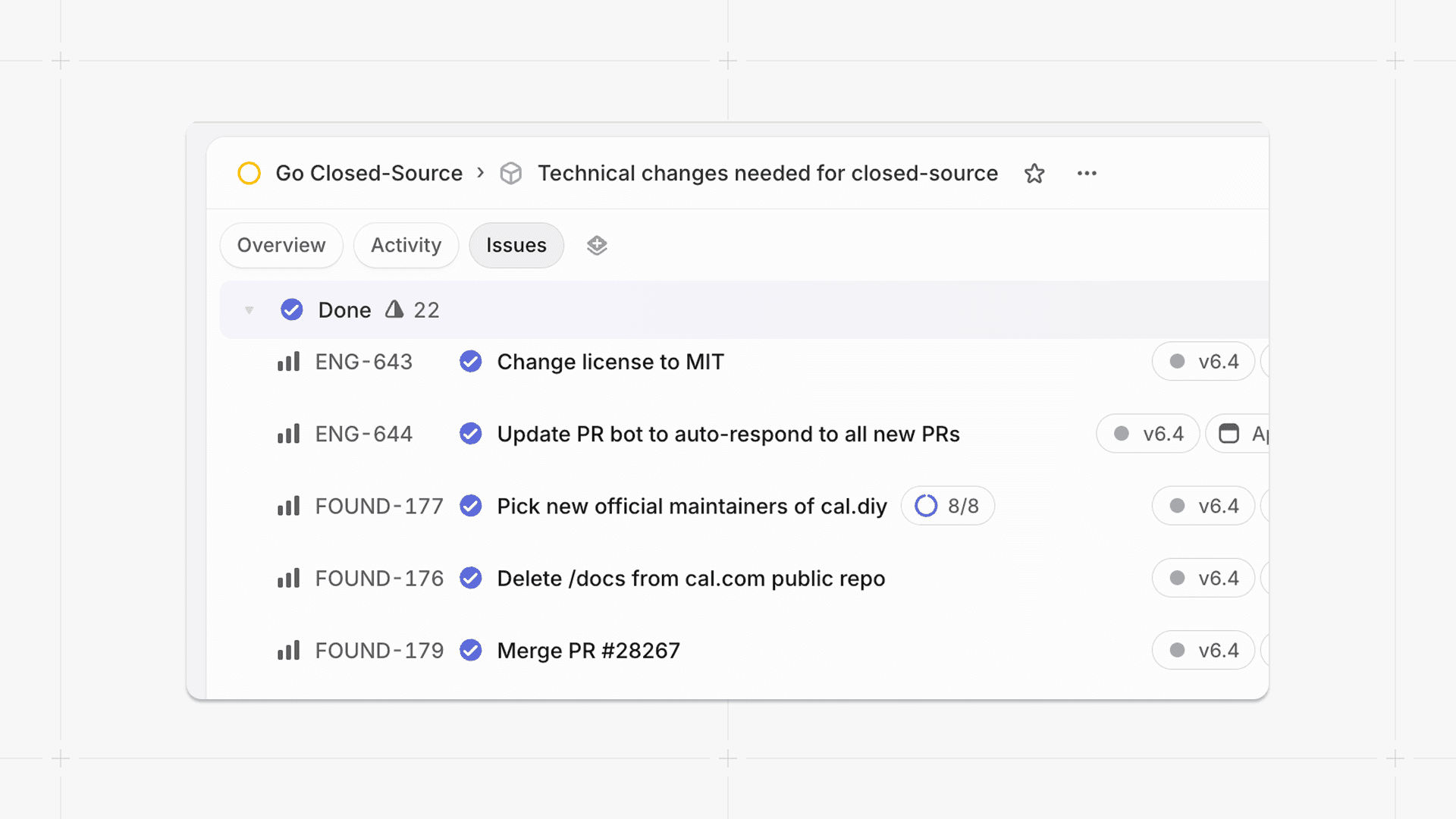
Moving to closed-source: the technical changes

We moved Cal.com's production codebase from a public repository to a private one. The public repository is now calcom/cal.diy, known as Cal.diy, the open-source, self-hostable, community-driven version of Cal.com.

Here's what changed.

By

Keith Williams

#

Engineering

Jan 29, 2026

Incident review: database load, cascading failures, and what we learned - January 27, 2026

On Tuesday, January 27th, we experienced a production incident that caused degraded performance across the platform and full downtime for some enterprise customers with high-volume event types.

The incident started as elevated database load, appeared resolved, and then revealed secondary failures in downstream systems. This post explains what happened, how we confirmed it, and what we changed as a result.

By

Alex van Andel

#

Engineering

Jan 1, 2026

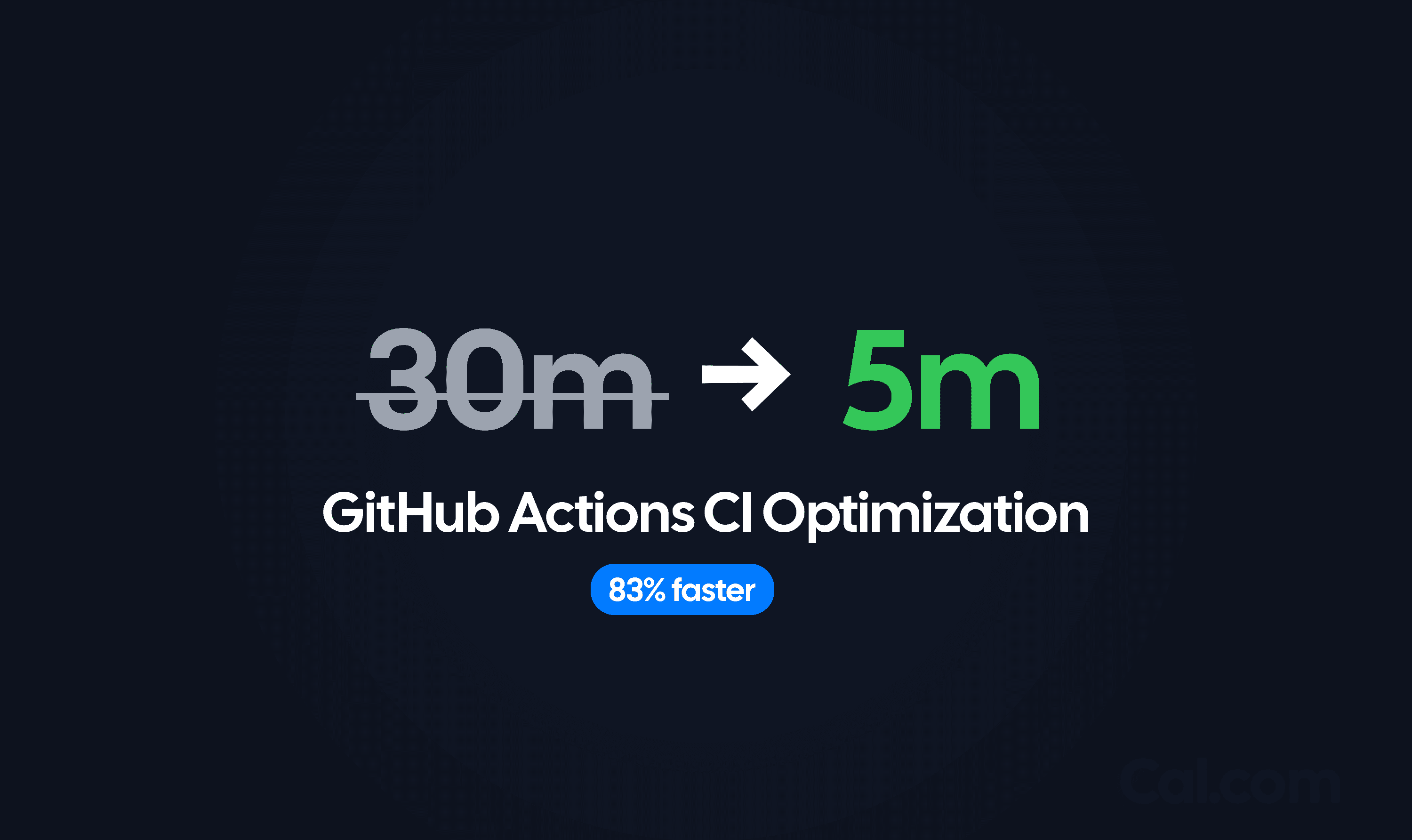
How We Cut Our CI Wall Time from 30 Minutes to 5 Minutes

Slow CI is one of those things that grinds engineering team’s gears. Engineers wait longer for feedback, context-switching increases, and the temptation to batch changes grows, which only makes things worse. We spent a few weeks optimizing our GitHub Actions workflows and cut our PR checks from 30 minutes to 5 minutes. That’s an 83% reduction in wait time, achieved without sacrificing any test coverage or quality gates.

There wasn’t a single magic fix. We looked at where time was actually going and applied three principles: smart job dependencies, aggressive caching, and test sharding. Here’s what we learned.

By

Keith Williams

#

Engineering

Nov 18, 2025

Incident review: Bookings page update - November 14, 2025

On November 14th, we launched an updated design for the bookings page but quickly encountered usability issues. In this post, we share what we learned from the incident and the steps we're taking to improve our release process.

By

Keith Williams

#

Engineering

Oct 14, 2025

Engineering in 2026 and beyond

We are building infrastructure that must almost never fail. To achieve this, we move fast while shipping amazing quality software with no shortcuts or compromises. This document outlines the engineering standards that will guide us through 2026 and beyond.

By

Keith Williams

#

Engineering

Jul 12, 2025

Finding and fixing O(n²) performance bottlenecks: Lessons from Cal.com's algorithm optimizations

A deep dive into how we detected, analyzed, and optimized poorly performing algorithms in a real production codebase.

By

Keith Williams

#

Engineering

Cal.com® and Cal® are registered trademarks
of Cal.com, Inc. All rights reserved.

Our mission is to connect a billion people by 2031
through calendar scheduling.

English
Logo

Downloads

Android

Chrome

Safari

Edge

Firefox

macOS

Windows

Linux

Need Help? support@cal.com or visit cal.com/help.

Solutions

iOS/Android App

Self-hosted

Pricing

Docs

Cal.ai - AI Phone Agent

Enterprise

Integrate Cal.com

Routing

Cal.com Atoms

Desktop App

FAQ

Enterprise API

GitHub

Docker

Use Cases

Sales

Marketing

Talent Acquisition

Customer Support

Higher Education

Telehealth

Professional Services

Hiring Marketplace

Human Resources

Tutoring

C-suite

Law

Resources

Affiliate Program

Help Docs

Blog

Cal Fonts

Teams

Embed

Recurring events

Developers

OOO

Workflows

Instant Meetings

App Store

Requires confirmation

Payments

Video Conferencing

Cal.com vs Calendly

Company

Jobs

About

Open Startup

Support

Privacy

Terms

License

Security

Changelog

Get a demo

Talk to sales

Cal.com® and Cal® are registered trademarks
of Cal.com, Inc. All rights reserved.

Our mission is to connect a billion people by 2031
through calendar scheduling.

English
Logo

Downloads

Android

Chrome

Safari

Edge

Firefox

macOS

Windows

Linux

Need Help? support@cal.com or visit cal.com/help.

Solutions

iOS/Android App

Self-hosted

Pricing

Docs

Cal.ai - AI Phone Agent

Enterprise

Integrate Cal.com

Routing

Cal.com Atoms

Desktop App

FAQ

Enterprise API

GitHub

Docker

Use Cases

Sales

Marketing

Talent Acquisition

Customer Support

Higher Education

Telehealth

Professional Services

Hiring Marketplace

Human Resources

Tutoring

C-suite

Law

Resources

Affiliate Program

Help Docs

Blog

Cal Fonts

Teams

Embed

Recurring events

Developers

OOO

Workflows

Instant Meetings

App Store

Requires confirmation

Payments

Video Conferencing

Cal.com vs Calendly

Company

Jobs

About

Open Startup

Support

Privacy

Terms

License

Security

Changelog

Get a demo

Talk to sales

Cal.com® and Cal® are registered trademarks
of Cal.com, Inc. All rights reserved.

Our mission is to connect a billion people by 2031
through calendar scheduling.

English
Logo

Downloads

Android

Chrome

Safari

Edge

Firefox

macOS

Windows

Linux

Need Help? support@cal.com or visit cal.com/help.

Solutions

iOS/Android App

Self-hosted

Pricing

Docs

Cal.ai - AI Phone Agent

Enterprise

Integrate Cal.com

Routing

Cal.com Atoms

Desktop App

FAQ

Enterprise API

GitHub

Docker

Use Cases

Sales

Marketing

Talent Acquisition

Customer Support

Higher Education

Telehealth

Professional Services

Hiring Marketplace

Human Resources

Tutoring

C-suite

Law

Resources

Affiliate Program

Help Docs

Blog

Cal Fonts

Teams

Embed

Recurring events

Developers

OOO

Workflows

Instant Meetings

App Store

Requires confirmation

Payments

Video Conferencing

Cal.com vs Calendly

Company

Jobs

About

Open Startup

Support

Privacy

Terms

License

Security

Changelog

Get a demo

Talk to sales